Nitrile Gloves: The Complete Buying Guide for Professionals
Nitrile Gloves: The Complete Buying Guide for Professionals
Nitrile gloves are among the most popular forms of hand protection in professional workplaces. They are used in automotive workshops, industrial facilities, laboratories, cleaning operations, food handling and tasks involving dirt, oils, liquids or certain chemicals.
However, not all nitrile gloves are the same. A thin disposable nitrile glove does not provide the same protection as a heavy-duty reusable industrial glove. The right choice depends on the task, the hazards involved, how long the gloves will be worn, the dexterity required and the protection standards met by the specific product.
This guide explains what nitrile gloves are, where they are used, their benefits and limitations, what EN 388 and EN ISO 374 mean and, most importantly, how to choose the right gloves for your job.
What Are Nitrile Gloves?
Nitrile is a synthetic elastomer widely used in the manufacture of protective gloves.
Compared with natural latex gloves, nitrile offers a different combination of properties, including good puncture resistance, a close fit and potential protection against certain chemicals, depending on the glove's construction and certification.
There are two main categories:
- Disposable nitrile gloves: typically thin gloves designed to protect against dirt, liquids and contact with specified substances.
- Nitrile-coated or nitrile work gloves: designed for more demanding tasks and capable of providing mechanical and/or chemical protection, depending on the model.
The word “nitrile” alone does not establish a glove's protection level.
Why Choose Nitrile Gloves?
Nitrile gloves are popular because they can combine protection, comfort and tactile sensitivity.
Good Fit and Dexterity
Thin nitrile gloves fit closely around the hand and allow the wearer to feel and handle objects accurately. This matters when working with small components, tools and materials that require precision.
Puncture Resistance
Nitrile can offer good mechanical durability, but actual protection depends on the design and model. Not every nitrile glove is suitable for tasks with a high risk of cuts or punctures.
Resistance to Oils and Grease
Many nitrile gloves are used where workers handle oils, grease and lubricants, including:
- Automotive workshops
- Machine shops
- Industrial operations
- Machinery maintenance
- Technical and repair work
Free from Natural Latex
Nitrile is a synthetic material and is often selected where natural latex is undesirable. Nevertheless, always verify the manufacturer's product specifications rather than relying on the material name alone.
Different Levels of Protection
Options range from thin nitrile gloves for precision tasks to heavy-duty gloves for industrial use. Certain models combine chemical resistance with mechanical protection tested against relevant standards.
Where Are Nitrile Gloves Used?
The most important selection criteria are the actual task and its hazards, rather than the job title alone.
Nitrile Gloves for Automotive Workshops
In automotive and machinery workshops, nitrile gloves are commonly used when handling:
- Engine oil
- Grease
- Lubricants
- Fuels and other fluids
- Dirt and contaminants
- Small metal components
-
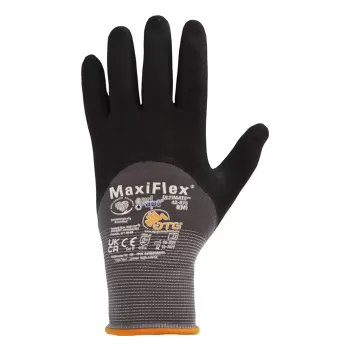 ATG MaxiFlex Ultimate 42-875 Work Gloves | EN 388 4131A | ESD
-
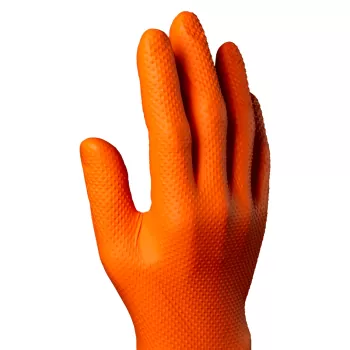 Aurelia® Ignite High-Strength Disposable Nitrile Gloves, Orange
-
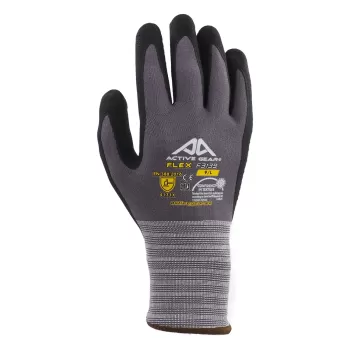 Active Gear FLEX F3141-F3140-F3139-F3138 Work Gloves - Breathable Microfoam Nitrile with Dots
-
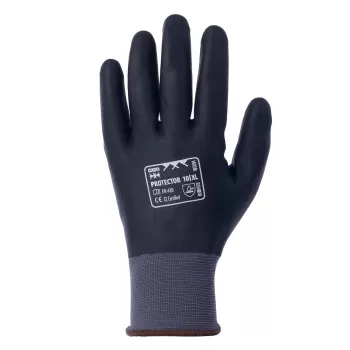 Axon PROTECTOR – Foam Nitrile Coated Work Gloves | EN 388 | PPE Hand Protection
For tasks involving greater mechanical risks, ordinary disposable gloves may not be sufficient. Consider nitrile-coated work gloves with appropriate mechanical protection.
Nitrile Gloves for Industrial Work
Industrial applications require many different glove designs. Depending on the job, you may need:
- Abrasion resistance
- Puncture resistance
- Protection when handling oils
- Chemical protection
- Reliable grip
- High dexterity
- Protection against electrostatic risks
-
ATG MaxiFlex Ultimate 42-875 Work Gloves | EN 388 4131A | ESD
-
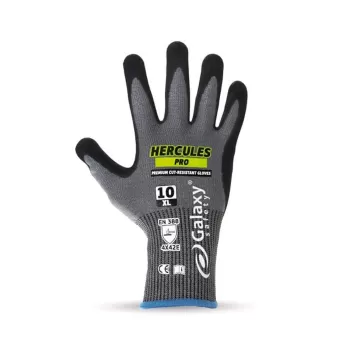 Galaxy Hercules Pro 20-269 Durable Nitrile Cutting Gloves
-
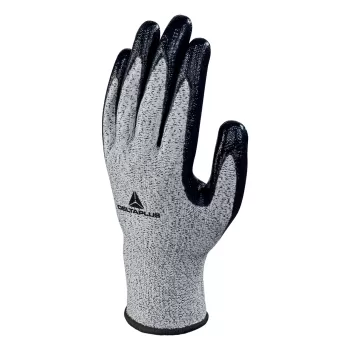 Delta Plus VENICUTB03 Cut Resistant Gloves - Level B Nitrile Foam Coated
Always select gloves according to the risk assessment for the specific activity.
Nitrile Gloves for Chemical Handling
Nitrile is widely used in chemical-resistant gloves, but not every nitrile glove protects against every chemical.
Chemical resistance must be assessed against:
- The specific chemical substance
- Its concentration
- Contact time
- Temperature
- Glove thickness and construction
- The manufacturer's chemical resistance data
-
 Aurelia® Bold – Premium Black Disposable Nitrile Gloves
-
 Aurelia® Robust Disposable Nitrile Gloves, Blue
-
Aurelia® Ignite High-Strength Disposable Nitrile Gloves, Orange
-
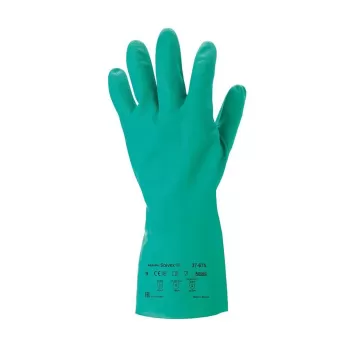 Ansell AlphaTec® Solvex® 37-675 Nitrile Chemical Protection Gloves
-
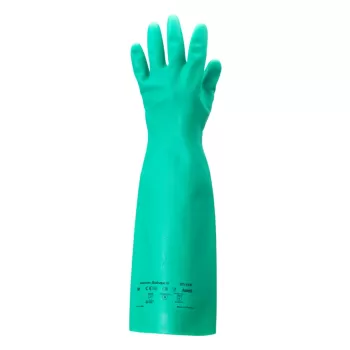 Ansell Γάντια Χημικής Προστασίας AlphaTec® Solvex® 37-185
EN ISO 374 is used to assess gloves against chemical risks, including tests of material permeation and degradation.
Nitrile Gloves for Cleaning
Cleaning professionals use both disposable nitrile gloves and reusable chemical-protective gloves. The appropriate option depends on the cleaning agents involved.
For protection against dirt and incidental splashes, a suitable disposable glove may be sufficient. Stronger cleaning chemicals or prolonged contact may require gloves with the appropriate chemical-protection certification.
-
Aurelia® Bold – Premium Black Disposable Nitrile Gloves
-
Aurelia® Robust Disposable Nitrile Gloves, Blue
-
Aurelia® Ignite High-Strength Disposable Nitrile Gloves, Orange
-
Ansell AlphaTec® Solvex® 37-675 Nitrile Chemical Protection Gloves
-
Ansell Γάντια Χημικής Προστασίας AlphaTec® Solvex® 37-185
Nitrile Gloves for Food Handling
Some nitrile gloves are suitable for food-contact applications, but this does not apply automatically to every nitrile glove.
When selecting gloves for food processing or handling, check the specific product's food-contact declaration and applicable documentation. Some professional models are approved by their manufacturers for food handling and also carry chemical-resistance test information.
-
Aurelia® Ignite High-Strength Disposable Nitrile Gloves, Orange
-
Aurelia® Robust Disposable Nitrile Gloves, Blue
-
Aurelia® Bold – Premium Black Disposable Nitrile Gloves
Disposable Nitrile Gloves vs Nitrile Work Gloves
This is one of the most important distinctions for buyers.
| Disposable nitrile gloves | Nitrile work gloves |
|---|---|
| Generally very thin | Usually thicker |
| High tactile sensitivity | Often provide greater mechanical protection |
| Intended for short-term use | Designed for more demanding tasks |
| Often used against liquids and dirt | Often used with tools and components |
| Usually replaced after use | May be reusable, depending on the product |
| Not all are certified for chemical protection | Certain models meet EN ISO 374 |
Do not choose gloves simply because the label says “nitrile”. Choose the level of protection that matches the hazard.
How Do I Choose the Right Thickness?
Thickness influences the balance between protection and dexterity.
Thin Gloves
Thin gloves generally offer better tactile sensitivity and are useful for precision handling, cleaning, small objects and general protection against dirt.
Medium-Thickness Gloves
These can offer a balanced combination of dexterity, durability and protection.
Thicker Gloves
Thicker gloves are often selected for more demanding industrial or chemical tasks. Some nitrile chemical-protection gloves are substantially thicker than disposable alternatives and are designed to provide a different level of resistance.
Nitrile Gloves and Chemical Protection: What You Need to Know
A glove made from nitrile is not automatically suitable for all chemicals. Chemical protection is assessed through specific tests.
What Does EN ISO 374 Mean for Nitrile Gloves?
EN ISO 374 covers protective gloves against chemical risks. Testing includes evaluation of permeation and degradation after exposure to specified chemicals.
Test chemicals may be identified by letters such as A, B, J, K, L, O, P, S and T, depending on the applicable test classification.
When buying chemical-resistant gloves, do not assess the material alone. Review the technical data sheet and the results for the chemicals you actually use.
What Does EN 388 Mean for Nitrile Gloves?
EN 388 concerns protection against mechanical risks. Depending on the applicable tests, it evaluates:
- Abrasion resistance
- Cut resistance
- Tear resistance
- Puncture resistance
- Additional cut performance under the relevant test method
For example, a marking such as EN 388: 4 1 0 1 X represents separate test results, not one overall protection score. This matters particularly when choosing nitrile-coated work gloves for industrial or technical tasks.
Nitrile vs Latex Gloves: Which Is Better?
There is no universal answer; suitability depends on the application.
| Feature | Nitrile | Latex |
|---|---|---|
| Synthetic material | Yes | No |
| Natural latex | No | Yes |
| Elasticity | Very good | Excellent |
| Tactile sensitivity | Very good | Excellent |
| Puncture resistance | Often very good | Often lower, depending on the product |
| Resistance to oils | Good for certain products | Limited in many applications |
| Chemical protection | Product-dependent | Product-dependent |
| Often preferred where natural latex allergy is a concern | Yes | No |
Material should not be the only selection criterion. Check the intended application and the specific product's certifications.
What Does “Powder-Free” Mean?
Powder-free gloves do not contain the internal powder used in some glove designs. They are commonly chosen where powder residue or material transfer is undesirable.
Certain nitrile gloves for industrial or food-handling applications are powder-free or feature a different internal finish, depending on the model.
Black, Blue or Other Nitrile Gloves: Does Colour Matter?
Colour can help identify gloves or organise different tasks, but it is not proof of protection or quality. A black nitrile glove is not necessarily stronger than a blue one.
Assess the material, thickness, construction, standards, mechanical ratings, chemical test data, fit, size and manufacturer instructions instead.
How to Choose the Right Nitrile Gloves
Before buying, answer the following questions.
1. What Task Will You Perform?
A mechanic, production-line worker, cleaning professional and chemical handler may all need different gloves.
2. What Is the Main Hazard?
- Dirt and contaminants
- Oils
- Liquids
- Chemicals
- Cuts
- Abrasion
- Punctures
- Heat
- Microorganisms
Identify the hazard first, then select the glove.
3. Do You Need Disposable Gloves?
If your main priorities are hygiene, protection against dirt and short-term use, suitable disposable nitrile gloves may be the right option.
4. Do You Need Mechanical Protection?
If you use tools, move components or face abrasion, cutting or puncture hazards, consider work gloves with appropriate EN 388 performance.
5. Will You Handle Chemicals?
If so, find the specific chemical in the glove manufacturer's resistance data. Do not rely solely on the term “nitrile”.
6. How Much Dexterity Do You Need?
Thinner, close-fitting gloves can improve tactile sensitivity. Thicker gloves may provide greater protection but can restrict dexterity.
7. What Is the Correct Size?
Oversized gloves reduce control; gloves that are too tight can cause discomfort and fatigue. Use the manufacturer's size chart.
Common Mistakes When Buying Nitrile Gloves
“All Nitrile Gloves Are the Same”
Incorrect. There are disposable, mechanical-protection, chemical-resistant and food-handling gloves, as well as many specialised designs.
“Nitrile Protects Against Every Chemical”
Incorrect. Chemical resistance must be checked for the specific substance and conditions of use.
“The Thicker the Glove, the Better”
Not necessarily. Thickness is only one factor. Excessively thick gloves may reduce dexterity, while thin gloves may not provide adequate mechanical or chemical protection.
“If It Has a CE Mark, It Is Right for My Job”
A CE mark does not mean a glove is suitable for every hazard. Check the relevant standards and the product's actual performance ratings.
“Nitrile Gloves Are Always Waterproof”
Protection against liquids depends on the glove's construction, length, condition and intended use. Chemical protection requires assessment against relevant standards and manufacturer guidance.
Which Nitrile Gloves Do You Actually Need?
For basic protection against dirt and short tasks: consider disposable nitrile gloves.
For workshops, machinery, oils and grease: consider nitrile-coated work gloves with suitable mechanical protection.
For chemicals: choose gloves with appropriate EN ISO 374 certification and verify resistance to the specific chemical.
For cuts and mechanical hazards: review EN 388 ratings and select the required performance level.
For food handling: verify that the exact model is suitable for the intended food contact.
For precision work: prioritise fit, thickness and dexterity.
Nitrile Gloves at YourSafety
At YourSafety, you can find different types of nitrile gloves for professional use, from disposable gloves to work gloves and chemical-protective gloves.
Choose according to the real task and the hazard you need to manage, not the glove material alone.
If you are unsure which gloves are appropriate, review the technical specifications or contact the YourSafety team for guidance.
Frequently Asked Questions About Nitrile Gloves
Are Nitrile Gloves Better Than Latex Gloves?
Not in every situation. The best material depends on the task, required protection, dexterity and working conditions.
Are Nitrile Gloves Suitable for Chemicals?
Some are. Chemical protection depends on the particular glove, not simply its nitrile composition. Check EN ISO 374 information and the manufacturer's chemical-resistance data.
Are All Nitrile Gloves Disposable?
No. There are disposable nitrile gloves as well as reusable nitrile work gloves and chemical-protective gloves.
Are Nitrile Gloves Suitable for Automotive Workshops?
Yes, depending on the task. Disposable gloves may be useful for basic handling of oils and dirt, while more demanding mechanical work may require purpose-designed nitrile work gloves.
What Does EN 388 Mean?
EN 388 covers mechanical risks such as abrasion, cutting, tearing and puncture.
What Does EN ISO 374 Mean?
EN ISO 374 concerns protection against chemical risks and includes tests relating to chemical permeation and degradation.
How Do I Choose the Right Size?
Measure your hand and consult the manufacturer's sizing chart. Gloves should fit securely without being too tight or too loose.
Are Black Nitrile Gloves Better?
Not necessarily. Colour alone does not indicate protection or quality.
How Often Should I Change Nitrile Gloves?
It depends on the glove type, the task and manufacturer instructions. Disposable gloves are intended for limited use. Reusable gloves should be replaced when worn, damaged or no longer able to provide the required protection.
Conclusion
Nitrile gloves are a versatile hand-protection option, but the right glove is not selected on material alone.
Before buying, consider:
Task → hazard → required protection → standards → thickness → dexterity → size.
This approach helps you select gloves that are not merely labelled “nitrile” but are suitable for your specific application.